Postcard History
 The history of postcard production can be divided into eras. Each era was marked by a change in laws or printing methods associated with postcard production. The type of postcard can help the collector determine the approximate age of an old postcard.
Some collectors specialize in a certain era, or concentrate on a subject that spans a larger time frame. A subcategory of postcards that crosses several of these eras is the real photo postcard. These were actual photographs taken, developed, and printed on postcard photo paper. These postcards have been produced from the early 1900's to the present.
A note about postcard sizes - Postcard collectors use the term "standard" to refer to postcards that measure 3.5" x 5.5". Larger postcards, measuring 4" x 6" are called "continentals." These are approximate measurements. Actual card size varies by manufacturer - if you were to carefully measure individual postcards, you would find that their sizes may be off by fractions.
The Postcard Eras
Pioneer Era (1873 - 1898): The earliest United States Postal Cards were those issued by the post office. Distribution of those cards started on May 12, 1873. The first commercial postcards produced in this country were sold at the Columbian Exposition in Chicago Illinois in 1893. These were the first privately printed souvenir postcards.
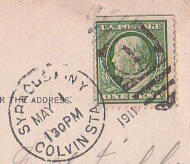
Private Mailing Card Era (1898 - 1901): American publishers were allowed to print and sell cards marked "Private Mailing Card, Authorized by Act of Congress on May 19, 1898." Required 1 cent postage. The back of the card was for the address only, messages had to be written on the front.
Undivided Back Era (1901 - 1907): The government granted private printers the right to use the term "Post Card" on the back of private postcards on December 24, 1901. The back was still for the address only. Most picture postcards of this era had a white space a the bottom or to the side of the picture where the name of the sender and a short messages could be written. The publication of Real Photo Postcards started during this era. During this era, other countries started to allow the use of divided back postcards (allowing a message on the address side). England was the first to allow divided back postcards in 1902, France followed in 1904, Germany in 1905, and finally the United States in 1907.
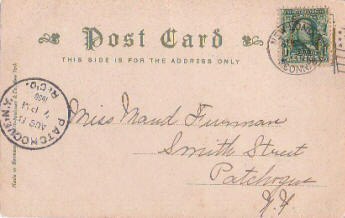
Divided Back Era (1907 - 1914): Postcards with a divided back, allowing for writing on the address side, were allowed in March of 1907. The postcard collecting hobby flourished during this time. In an age without radio or television, picture postcards offered an inexpensive and accessible view of the world. Up to this point, most postcards had come from Germany. Germany was more advanced in lithographic printing and the early German printed cards are of exceptional quality. With the World War, however, postcards had to come from England or the United States.
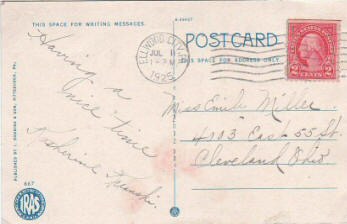
White Border Era (1915 - 1930): Most of these were printed in the U.S. A white border was left around the picture during the printing process to save on ink costs. The descriptions printed on the back of the postcard got a little longer during this era. These postcards cards were often of poorer quality than earlier cards. There were fewer greetings postcards during this period, but scenics, events, and other types of cards remained popular.
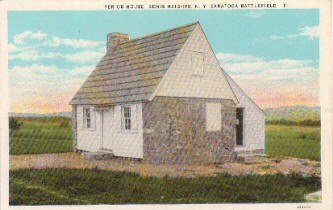
Linen Era (1930 - 1944): There are lots of linens out there. A new printing process allowed use of a high rag content paper with a linen look. If you look closely at these cards, you can see a weave texture in the paper. This new process also allowed for the use of bright, gaudy ink colors, resulting in very vivid, but somewhat unnatural coloring of the postcard pictures. Some linens were printed with a white border and other were printed "full bleed" - with colors extending to the outside edge of the card. Curt Teich, a Chicago postcard publisher, flourished during this era.
Although linen cards may seem abundant to the collector, there were actually fewer of these cards printed than in earlier eras. Postcard collecting was not a popular hobby during this period and few people kept postcard albums. Many linen postcards were disposed of after being received.
.jpg)
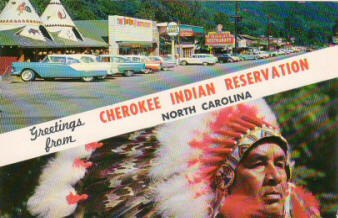
Photochrome Era (1945 - Present): The photochrome, or chrome postcard is the type of postcard in use today. The first cards printed with this process were introduced by the Union Oil Company in their Western service stations in 1939. Photochrome cards feature colorful photographic images, but should not be confused with Real Photo postcards. The photochromes are reproduced through a printing process, while real photo postcards were actual photographs printed on special postcard sized photographic paper.